

This training is designed for executives, managers, teams, entrepreneurs and organisations seeking to integrate Artificial Intelligence responsibly and strategically into their operations.
Artificial Intelligence is no longer a future concept for business. It is already transforming how organisations operate, compete and grow. From decision-making and customer engagement to finance, marketing and operations, AI is reshaping every business function. Yet many organisations are adopting AI tools without the internal capability, strategic clarity or ethical guardrails required to use them effectively.
This growing capability gap leaves businesses experimenting without direction, underutilising powerful tools, introducing operational risk, or falling behind competitors who integrate AI with purpose and discipline.
AI in Business training is designed to close this gap.
Through structured and practical learning, organisations develop the skills to use AI as a strategic business enabler, not a disruptive add-on. The focus is on strengthening decision-making, optimising workflows and driving sustainable growth, aligned with global digital transformation and responsible AI principles adopted by leading organisations worldwide.
Why AI in Business Matters
The future of business belongs to organisations that can adapt quickly, use data intelligently and leverage technology responsibly. However, many teams are expected to “use AI” without training, structure or clarity on best practice.
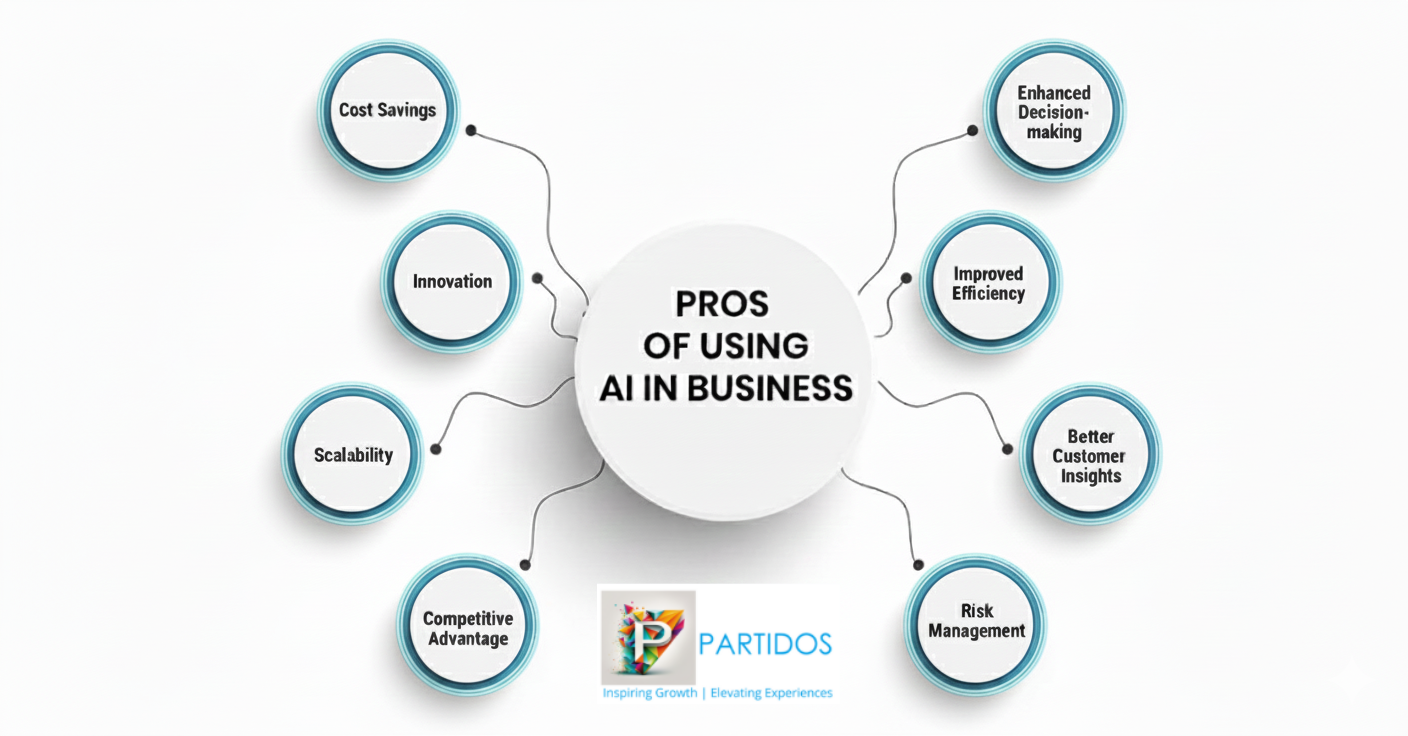
AI in Business equips organisations with the ability to:
- Integrate AI into daily workflows to improve productivity
- Strengthen decision-making using AI-supported insights
- Reduce operational inefficiencies and manual workload
- Identify opportunities for innovation and competitive advantage
- Use AI responsibly while managing risk, bias and misinformation
For example, instead of managers spending hours compiling reports from multiple systems and spreadsheets, AI can be used to summarise performance data, highlight risks and generate insights—allowing leaders to focus on decisions rather than data preparation.
In this approach, AI supports leadership and expertise, rather than replacing judgment or accountability.

Understanding AI Concepts for Business Environments
Effective AI adoption begins with understanding.
Teams are equipped with foundational AI knowledge tailored specifically for business contexts, ensuring AI is not treated as a black box but as a tool with defined capabilities, limitations and risks.
Participants learn to:
- Understand AI systems and real-world business use cases
- Validate AI-generated outputs for accuracy and relevance
- Manage risk, bias and misinformation
- Use practical AI interaction commands for everyday workflows
- Identify opportunities for automation and optimisation
This foundational capability builds confidence and prevents costly misuse.
AI for Research and Market Intelligence
AI enables organisations to move faster from information to insight.
This module supports teams in using AI to gather intelligence, analyse markets and inform strategic planning.
Teams learn how to:
- Collect and summarise large volumes of information efficiently
- Conduct market and competitor analysis
- Identify gaps, trends and emerging opportunities
- Use AI insights to support innovation and growth decisions
AI accelerates insight generation while leaving final judgment firmly in human hands.
AI for Marketing and Customer Engagement
AI is transforming how organisations engage customers and build brands.
This module supports marketing and sales teams in using AI to strengthen visibility, consistency and customer communication.
Training includes:
- Content generation for ads, campaigns and social media
- Customer sentiment analysis
- Market research using AI tools
- Sales copywriting and product descriptions
- Designing customer engagement journeys informed by AI insights
AI enhances creative execution while preserving brand strategy and voice.
AI for Data-Driven Decision-Making
Strong leadership depends on timely, accurate insight.
This module enables leaders and managers to use AI-powered analytics to support strategic and operational decisions.
Teams learn how to:
- Analyse large datasets efficiently
- Use forecasting and predictive analytics
- Identify trends and competitive signals
- Support planning and performance management with AI insights
AI becomes a decision-support layer, strengthening confidence and organisational agility.
AI for Finance and Administration
AI offers immediate value in finance and administrative functions.
This module equips finance and admin teams with tools that improve accuracy, speed and compliance.
Training includes:
- Financial modelling and scenario analysis
- Budgeting and forecasting support
- Automated data entry and reconciliation
- Risk analysis using AI insights
- Financial reporting and documentation
Used responsibly, AI reduces manual burden while improving financial oversight.
AI for Creative Work and Branding
AI is reshaping creative production across industries.
This module empowers marketing, brand and content teams to produce high-quality creative outputs efficiently while maintaining consistency.
Topics include:
- Creating visuals, graphics and design concepts with AI tools
- Generating marketing copy, scripts and brand messaging
- Producing consistent social media content at scale
- Analysing audience behaviour to refine creative strategies
- Automating repetitive creative tasks
- Maintaining brand tone, style and visual identity
AI supports creativity by accelerating delivery, not diluting originality.
Ethical and Responsible AI Use in Business
Responsible AI adoption is critical for sustainable growth and trust.
This module focuses on the ethical, social and regulatory implications of AI in commercial environments, including:
- Privacy and data protection
- Transparency and accountability
- Bias, fairness and responsible automation
- Governance structures for AI adoption
- Developing internal ethical AI guidelines
Ethics is positioned as a business safeguard, protecting reputation, customers and long-term value.
Preparing Organisations for an AI-Enabled Business Future
AI will continue to shape competitiveness, productivity and innovation across all sectors. Organisations that lack AI readiness risk inefficiency, strategic blind spots and lost opportunities.
AI in Business prepares organisations to:
- Build internal AI capability
- Improve digital readiness across teams
- Use AI ethically, effectively and confidently
- Drive sustainable and responsible growth
Participants develop the skills, mindset and governance awareness needed to thrive in an AI-enabled economy.
AI in Business as an Enabler, Not a Disruption
The goal of AI in Business is to build smarter, more resilient and more competitive organisations.
AI in Business enables organisations to:
- Build trust through responsible AI adoption
- Optimise operations and workflows
- Strengthen decision-making and innovation
- Reduce costs while improving performance